Search This Blog

Showing posts with label High Speed. Show all posts

Sunday, September 1, 2013

USB Gets A Speed Boost With 3.1 Release

USB Gets A Speed Boost With 3.1 Release:
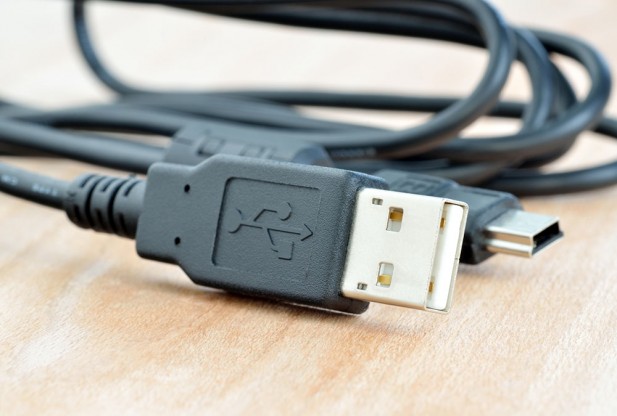


The USB 3.0 Promoter Group has completed its USB 3.1 Specification, which will enable the SuperSpeed USB, offering speeds up to 10 Gbps.

To get the 10 Gbps rate of the SuperSpeed USB, the standard uses more efficient data encoding. The USB 3.0 Promoter Group says it will deliver more than twice the effective data throughput performance. This is possible by using enhanced USB connectors and cables.

“The USB 3.1 specification primarily extends existing 3.0 protocol and hub operation for speed scaling along with defining the next higher physical layer speed as 10 Gbps,” said Brad Saunders, USB 3.0 Promoter Group chairman, in a statement from the organization. “The specification team worked hard to make sure that the changes made to support higher speeds were limited and remained consistent with existing USB 3.0 architecture to ease product development.”

Developers will be able to upgrade existing USB protocols, and use the faster speeds on new devices and applications.

“We recognize this advancement in USB technology is an important development for our customers,” said Tom Bonola, chief technology officer, Business PC Solutions at HP. “The USB 3.1 Specification enables us to meet the growing needs of our customers for faster data transfer while maintaining backwards compatibility with existing devices.”

While the USB 3.0 Promoter Group plans to continue advancements on the standard, the new update comes from industry demand as much as from the initiatives of the group.

“The industry has affirmed the strong demand for higher throughput, for user-connected peripherals and docks, by coming together to produce a quality SuperSpeed USB 10 Gbps specification,” said Alex Peleg, Vice President, Intel Architecture Group. “Intel is fully committed to deliver on this request.”

The .1 release, USB 3.1, is backwards compatible with USB 3.0 and 2.0, The Register reports. “The new speed will only be achievable with a kit using USB 3.1, but such products will work just fine in older USB ports,” the article explained.

“While maintaining backward compatibility, USB continues to advance to meet customer’s growing need for higher speed data,” said Roland Sperlich, TI Consumer and Computing Interface Product Line Manager. “The 10 Gbps data rate allows designers across many industries to do more with a universal standard.”

“In this multi-device world, the USB 3.1 updates will enable end-users to move content across devices quickly, conveniently and without worrying about compatibility,” said Emile Ianni, corporate vice president of Platform Solutions Engineering at AMD. “AMD thanks our engineers as well as the other technology contributors for bringing to market robust innovation that is designed to work seamlessly with new and existing solutions.”

USB 3.1 competes with the Thunderbolt I/O standard, which promises data transmission throughput speeds up to 20 Gbps. Performance on the competing platform has not proven to be as promised. The 20 Gbps speeds have been demonstrated in the lab, but are yet to be fulfilled in commercial applications.

Please Comment If You Like This Post.

Wednesday, April 10, 2013

Intel’s Thunderbolt Technology Doubles Data Transfer Speed

Intel’s Thunderbolt Technology Doubles Data Transfer Speed:

Intel took the stage at the National Association of Broadcasters conference (NAB) this week to show off its Thunderbolt technology, a new I/O protocol capable of transmitting data with up to 20 Gbps throughput.

What´s more, the new interface is capable of these speeds in both directions. In a demonstration at NAB, Engadget reported Thunderbolt was running at 1,200 Mbps. The speed isn’t quite the promised 20 Gbps, but it is faster than anything else out there. USB 3.0 promises to transmit up to 10 Gbps by 2014, up from a current speed of 5 Gbps, All Things D reports

Intel says Thunderbolt currently has about 200 licensees. Among those licensees is PROMISE Technology. The company showcased fast storage solutions using Thunderbolt at NAB this week. Included in its lineup of Thunderbolt products is the Pegasus R4/R6 and Pegasus J2.

“PROMISE is very excited to showcase the Pegasus R4/R6 and the Pegasus J2 on Windows at the NAB Show 2013,” said James Lee, CEO of PROMISE Technology, in a statement.

“The incredible throughput and ease of use of Pegasus are helping creative professionals on both Mac and PC work much more efficiently and there is no better stage than the NAB Show to demonstrate how PROMISE’s storage solutions with Thunderbolt technology can accelerate and simplify even the most demanding digital media workflows.”

Intel supports its licensees, and the demo of PROMISE storage solutions was as much of a showcase for PROMISE as it was for Intel.

“Thunderbolt brings incredible performance, flexibility and simplicity to professionals in the media and entertainment industry,” said Jason Ziller, Intel’s director of Thunderbolt Marketing, in a company statement. “The Pegasus J2 and Pegasus R4/R6 help highlight what is possible for creative professionals, whether they are working on Mac or PC.”

While there are numerous uses for Thunderbolt that take advantage of the speed, one key benefit is the ability to display and transfer 4K video simultaneously, Mashable says. The 4K TV standard, also called UltraHD, is on the marketplace. Adoption of the sets has been slow because the price is still high, but also because there is currently very little content for 4K televisions. Thunderbolt’s ability to send and receive video at speeds exceeding 4K means more options for delivering 4K content will likely become available, including streaming from a computer.

The Thunderbolt protocol was introduced in collaboration between Apple and Intel in early 2011. The standard is available for all current Apple computers with the exception of the Mac Pro tower. To date, adoption of Thunderbolt under the Apple Mac portfolio has reportedly been slow.

Future plans for Thunderbolt, which Intel has codenamed Falcon Ridge, expect to improve adoption of Thunderbolt protocols for devices for both PC and Apple markets. Advanced Thunderbolt hardware under the Falcon Ridge blanket will be available in the next generation of chipsets and in products by the end of the year. Intel expects to see a growing proliferation of these products throughout 2014.

Please Comment If You Like This Post.