Search This Blog

Wednesday, March 26, 2014

Google: GPA, test scores aren't the criteria for hiring

MOUNTAIN VIEW: Last June, in an interview with Adam Bryant of The New York Times, Laszlo Bock, the senior vice president of people operations for Google — i.e, the guy in charge of hiring for one of the world's most successful companies — noted that Google had determined that "GPAs are worthless as a criteria for hiring, and test scores are worthless. ... We found that they don't predict anything."

He also noted that the "proportion of people without any college education at Google has increased over time" — now as high as 14% on some teams. At a time when many people are asking, "How's my kid gonna get a job?" I thought it would be useful to visit Google and hear how Bock would answer.
Laszlo Bock, the guy in of hiring for Google
Don't get him wrong, Bock begins, "Good grades certainly don't hurt." Many jobs at Google require math, computing and coding skills, so if your good grades truly reflect skills in those areas that you can apply, it would be an advantage. But Google has its eyes on much more.
"There are five hiring attributes we have across the company," explained Bock. "If it's a technical role, we assess your coding ability, and half the roles in the company are technical roles. For every job, though, the No. 1 thing we look for is general cognitive ability, and it's not IQ. It's learning ability. It's the ability to process on the fly. It's the ability to pull together disparate bits of information. We assess that using structured behavioral interviews that we validate to make sure they're predictive."
The second, he added, "is leadership — in particular emergent leadership as opposed to traditional leadership. Traditional leadership is, were you president of the chess club? Were you vice president of sales? How quickly did you get there? We don't care. What we care about is, when faced with a problem and you're a member of a team, do you, at the appropriate time, step in and lead. And just as critically, do you step back and stop leading, do you let someone else? Because what's critical to be an effective leader in this environment is you have to be willing to relinquish power."
What else? Humility and ownership.
"It's feeling the sense of responsibility, the sense of ownership, to step in," he said, to try to solve any problem — and the humility to step back and embrace the better ideas of others. "Your end goal," explained Bock, "is what can we do together to problem-solve. I've contributed my piece, and then I step back."
And it is not just humility in creating space for others to contribute, says Bock, it's "intellectual humility. Without humility, you are unable to learn." It is why research shows that many graduates from hotshot business schools plateau. "Successful bright people rarely experience failure, and so they don't learn how to learn from that failure," Bock said.
"They, instead, commit the fundamental attribution error, which is if something good happens, it's because I'm a genius. If something bad happens, it's because someone's an idiot or I didn't get the resources or the market moved. ... What we've seen is that the people who are the most successful here, who we want to hire, will have a fierce position. They'll argue like hell. They'll be zealots about their point of view. But then you say, 'here's a new fact,' and they'll go, 'Oh, well, that changes things; you're right.'" You need a big ego and small ego in the same person at the same time.
The least important attribute they look for is "expertise." Said Bock: "If you take somebody who has high cognitive ability, is innately curious, willing to learn and has emergent leadership skills, and you hire them as an HR person or finance person, and they have no content knowledge, and you compare them with someone who's been doing just one thing and is a world expert, the expert will go: 'I've seen this 100 times before; here's what you do.'" Most of the time the non-expert will come up with the same answer, added Bock, "because most of the time it's not that hard." Sure, once in a while they will mess it up, he said, but once in a while they'll also come up with an answer that is totally new. And there is huge value in that.
To sum up Bock's approach to hiring: Talent can come in so many different forms and be built in so many nontraditional ways today, hiring officers have to be alive to every one - besides brand-name colleges. Because "when you look at people who don't go to school and make their way in the world, those are exceptional human beings. And we should do everything we can to find those people." Too many colleges, he added, "don't deliver on what they promise. You generate a ton of debt, you don't learn the most useful things for your life. It's [just] an extended adolescence."
Google attracts so much talent it can afford to look beyond traditional metrics, like GPA. For most young people, though, going to college and doing well is still the best way to master the tools needed for many careers. But Bock is saying something important to them, too: Beware. Your degree is not a proxy for your ability to do any job. The world only cares about — and pays off on — what you can do with what you know (and it doesn't care how you learned it). And in an age when innovation is increasingly a group endeavor, it also cares about a lot of soft skills — leadership, humility, collaboration, adaptability and loving to learn and re-learn. This will be true no matter where you go to work.

Please Comment If You Like This Post.

Tuesday, January 7, 2014

Intel Edison: an SD-card sized PC, Intel is on the way towards Wearable Computing

LAS VEGAS: Consumer Electronics Show (CES), 2014
How small a computer can get?
If you ask Intel it is already as small as a SD card!
Intel has unveiled Edison, a computer housed in an "SD card form factor".

The device uses Quark microprocessor technology that was showed by Intel a few months ago. Intel CEO Brian Krzanich said that the "computer" is meant to be used in wearable smart devices like a health tracker or in everyday products like coffee mugs that has to be connected to the internet.


Intel CEO Brian Krzanich has revealed the company's vision for wearable computing - and at its core is an SD-card sized PC called Edison.

Edison is based on Quark technology, the tiny, low-power system-on-a-chip that was designed for wearable computers, such as smart watches, and the Internet of Things.

Quark was unveiled in September, and Intel used the first keynote at CES 2014 to reveal Edison, a dual-core, 22nm version built in an SD card housing for easy development.

"It's a full Pentium-class PC in the form factor of an SD card," Krzanich said.

It not only supports multiple OSes and has built-in support for Bluetooth and Wi-Fi, but it also has its own app store - and has Wolfram Alpha's Mathematica baked in by default.

Edison will be available in the middle of this year, Krzanich said. "We believe that Edison will enable rapid innovation and rapid product development," he said.

What is Wearable Computing? 

A term that refers to computer-powered devices or equipment that can be worn by a user, including clothing, watches, glasses, shoes and similar items. Wearable computing devices can range from providing very specific, limited features like heart rate monitoring and pedometer capabilities to advanced “smart” functions and features similar to those a smartphone or smart-watch offers.

These more advanced wearable computing devices can typically enable the wearer to take and view pictures or video, read text messages and emails, respond to voice commands, browse the web and more. While wearable computing devices are only just now starting to emerge from the realm of science fiction into reality, rumored devices like Google Glasses and the Apple iWatch may soon bring advanced wearable computing devices into the mainstream.

Wearable examples

Krzanich admitted wearables were an area that needed kick-starting. "Why aren't wearables everywhere, what's holding back wearbles in this market place?” he asked.

He had his own answer: current wearables require the user to carry another device at the same time, and they don't solve real life problems. To fix that, he called for the industry to "make everything smart" and advised that "simplicity makes technology desirable."

To lead by example, Krzanich unveiled Intel's own versions of key devices to inspire the rest of the industry.
First up was a connected headset, a pair of smart earbuds that track biometrics such as heart rate and pulse while still playing audio. The data is sent to a smartphone, and the earbuds harvest energy directly from the wearer, so they don't require batteries.

Smart Earbuds

The second device was a smart charging bowl. Simply drop a device - such as the smart earbuds - into the bowl, and they charge automatically without fiddling with wires.

"It's a very simple device you can leave on your counter, and it will go ahead and charge what you need," he said. "This is one of those key deliverables that will make wearables work."

The third demo Krzanich showed off was a smart watch, which has its own connectivity so it doesn't require tethering. It also features what he calls geofencing, letting it track the wearer.

For example, a parent could use it to track a child on their walk to school. If the child deviates from the standard path, or doesn't get to school on time, the parent is automatically notified.

Smart turtles

Krzanich also showed off a "smart turtle" baby monitoring system, created by MIT based firm Rest Devices using an early version of Edison.

Calling it nursery 2.0, Krzanich showed how the turtle-shaped monitoring device can be clipped to a baby's clothing to keep watch of its movement, pulse or breathing.

Turtle
The signal is interpreted and sent to a coffee cup that displays breathing patterns and other notifications that indicate if a child is unhappy.

Intel Cup
The system can even be connected to an Edison-embedded smart bottle warmer, so if the child's activity suggests it's hungry, the bottle will be ready to go by the time mum or dad realises it's feeding time.

Wearable contest

To help spur such creativity in wearables, Krzanich unveiled an Intel competition to create innovation designs using Edison.

The top prize is $500,000, with a total $1.3 million at stake, and the top ten creations will be brought to market by Intel and partners, he said.

Please Comment If You Like This Post.

Monday, January 6, 2014

It's Blue Monday aka most depressing day of year

 New York, Jan. 06:

Feeling the Monday blues a bit more today?

You're not alone.

With millions of people around the world coming back to work on Jan. 6, various web analytics and social media statistics showed that Jan. 6 is the most depressing day of 2014. Further analysis showed it is mainly because it is the first Monday of getting back to work.

Researchers have named this Monday as the most depressing day of the year.
Researchers for protein drink Upbeat analyzed two million tweets that were posted in the last three January's, and found that it was a day when people break their new year's resolutions, the New York Daily News reported.

The study also found that people, who are unhappy with their love lives, look for a new partner and those unhappy at their work place consider switching.

The first Monday of the month also sees record posts about feeling guilty, being tired, eating too much, being broke or wanting to quit the UK for warmer climate.

According to relationship experts, the strains of festive family get-togethers coupled with alcohol could lead to marriages crumbling.

IllicitEncounters.com also sees a 25 per cent increase in activity after the festive break.

Feeling Glum?

 Reasons: Why People Are Depressed on Jan. 6, 2014

The most recent report revealed that most feel low because of lack of sleep and the struggle to keep up with their New Year's resolutions. Guilty-ridden tweets are also five times higher as people go back to work and get to arrive in a lot of realizations. The report also showed that the female population seem to stay more positive throughout the entire first month of the year.

Out of a total score of 100, most women got an average of 67. Susan Hignett, brand manager of a high energy protein drink called Upbeat, said it is normal for people to find some days very tough to stay positive.

However, there are also the leading times of the year when almost everyone feels great, upbeat, motivated and positive. Those top six dates of 2013 include Dec. 24 and 25, Jan. 1, Feb. 14, April 20 and July 7.

Jan. 6 can truly be a depressing day. But there are ways that an individual can do to keep him on top of his moods and stay happy.

Please Comment If You Like This Post.

Wednesday, December 4, 2013

Hackers steal 2 million Facebook, Google, Twitter, Yahoo passwords

BOSTON: Security experts have uncovered a trove of some 2 million stolen passwords to websites including Facebook, Google, Twitter and Yahoo from internet users across the globe.

2 Million Google, Facebook, Twitter Passwords Stolen

Hackers steal 2 million Facebook, Google, Twitter, Yahoo passwords
Are you safe?


Researchers with Trustwave's SpiderLabs said they discovered the credentials while investigating a server in the Netherlands that cybercriminals use to control a massive network of compromised computers known as the "Pony botnet."

The company said that it has reported its findings to the largest of more than 90,000 websites and internet service providers whose customers' credentials it had found on the server.

The data includes more than 3,26,000 Facebook accounts, some 60,000 Google accounts, more than 59,000 Yahoo accounts and nearly 22,000 Twitter accounts, according to SpiderLabs. Victims' were from the United States, Germany, Singapore and Thailand, among other countries.

Representatives for Facebook and Twitter said the companies have reset the passwords of affected users. A Google spokeswoman declined comment. Yahoo representatives could not be reached.

SpiderLabs said it has contacted authorities in the Netherlands and asked them to take down the Pony botnet server.

An analysis posted on the SpiderLabs blog showed that the most-common password in the set was "123456," which was used in nearly 16,000 accounts. Other commonly used credentials included "password," "admin," "123" and "1."

Graham Cluley, an independent security expert, said it is extremely common for people to use such simple passwords and also re-use them on multiple accounts, even though they are extremely easy to crack.
"People are using very dumb passwords. They are totally useless," he said.

The list of hacked account provided SpiderLabs:
· 318,000 Facebook accounts
· 70,000 Gmail, Google+ and YouTube accounts
· 60,000 Yahoo accounts
· 22,000 Twitter accounts
· 9,000 Odnoklassniki accounts (a Russian social network)
· 8,000 ADP accounts (ADP says it counted 2,400)
· 8,000 LinkedIn accounts

Opinion:

Were you on the hackers’ hit list? How can you find out and what do you do about it?
Like most of you, I am on Twitter, Facebook, Google and every other major website or social network out there, and though I have learned that privacy and the Internet in the same sentence is an oxymoron, we still hope for a certain modicum of security when using these sites.
Maybe I should say an illusion of privacy. With that said, shouldn’t Facebook, Google, Twitter and the rest notify users of the breach? If they did, I have yet to receive an email or notification.
Facebook, Twitter, LinkedIn and ADP claim they have notified the compromised users, but CNN Money said Google and Yahoo declined to comment.
To be on the safe side, I recommend changing all your passwords immediately and refraining from posting all your personal information online, although that ship may have already sailed for most of us.

Please Comment If You Like This Post.

Thursday, November 28, 2013

India To Have World's Largest Facebook Population By 2016: Study

Indians are increasingly logging into their Facebook and Twitter accounts, with the country recording the highest social networking growth of 37.4 per cent this year, according to a new study.
India To Have World's Largest Facebook Population By 2016


India will also have the world’s largest Facebook population by 2016, according to research firm eMarketer.


India, with the highest growth this year, will increase the user numbers by 37.4 per cent, while Indonesia’s numbers will climb 28.7 per cent and Mexico will grow its social network user base by 21.1 per cent.


All the three countries are also high-growth areas for Facebook, the world’s largest social network, which eMarketer estimates will reach a worldwide monthly user base of 1.026 billion this year.


The US remains the single country with the largest number of Facebook users, at 146.8 million this year, and India comes in a distant second.


But with India’s large population and high expected growth rate, eMarketer believes the country will develop the largest Facebook population of any country in the world by 2016.

Please Comment If You Like This Post.

Sunday, September 22, 2013

Two Indian Institute of Science scientists crack mystery of black holes

Theoretical physicists at the Indian Institute of Science (IISc) in Bangalore have unraveled new facts about black holes that are expected to have significant impact on understanding these cosmic bodies better. A black hole is a region of space-time from which gravity prevents anything, including light, from escaping.

Banibrata Mukhopadhyay and Indrani Banerjee
IISc researchers, Banibrata Mukhopadhyay and Indrani Banerjee for the first time established a correlation between two fundamental and important facets of black holes (BHs) — their mass and their spin.

 Black holes of stellar mass are expected to form when very massive stars collapse at the end of their life cycle. After a black hole has formed it can continue to grow by absorbing mass from its surroundings. By absorbing other stars and merging with other black holes, super-massive black holes of millions of solar masses may form. There is general consensus that super-massive black holes exist in the centers of most galaxies. The hole is called “black” because it absorbs all the light that hits the horizon, reflecting nothing, just like a perfect black body in thermodynamics.

Despite its invisible interior, the presence of a black hole can be inferred through its interaction with other matter and with electromagnetic radiation such as light. Matter falling onto a black hole can form an accretion disk heated by friction, forming some of the brightest objects in the universe. Astronomers have identified numerous stellar black hole candidates in binary systems, and established that the core of our Milky Way galaxy contains a super-massive black hole of about 4.3 million solar masses.

Until the last decade, while the masses of several BHs had been determined independently through observation, there was no estimate of their spin. The IISc team has found that for a fixed accretion rate, the mass of Black Holes increases with the increasing spin, thus establishing a correlation between the two parameters for the first time.

Please Comment If You Like This Post.

Tuesday, September 3, 2013

Microsoft buys Nokia mobile unit to fight Apple, Google


Microsoft buys Nokia mobile unit to fight Apple, Google

Microsoft buys Nokia mobile unit to fight Apple, Google


HELSINKI — Mobile phone pioneer Nokia on Tuesday announced the sale of its sinking handset business to software giant Microsoft, which is fighting to catch up with rivals Apple and Google in the fierce smartphone market.

Nokia, the world's leading mobile phone maker until last year, will now focus on network infrastructure and mapping services, which it called "the best path forward for Nokia and its shareholders."

The sale for 5.44 billion euros ($7.17 billion) was cheered by Nokia investors, pushing the Finnish company's share up more than 40 percent in late afternoon deals, but Microsoft shares fell 4.5 percent in early trading to $31.90.

Microsoft chief executive Steve Ballmer said the Nokia acquisition -- the second-biggest in its history after Skype -- was a "signature event in our transformation" and one that "will accelerate our success in smartphones."

Nokia pioneered the mobile phone and dominated the market for 14 years, until it was overtaken by Samsung in 2012 as the top-selling brand.

The company, long the pride of Finland, was blindsided by the shift to smartphones and struggled to fight off increasing competition from Apple's iPhone and Samsung's Galaxy and rumours of a sale have swirled for months.

Microsoft and Nokia have been partnered since 2011, co-creating Nokia's Lumia line of smartphones using Microsoft's Windows Phone software.

-- Microsoft attempting 'to stem the decline in global product sales' --

And with Tuesday's deal, Microsoft is following in the footsteps of rival Google, which created the Android smartphone operating system and then branched into hardware when it bought phone-maker Motorola.

"The trigger behind this is without a doubt the current restructuring of business at Microsoft in which the tech giant attempts to stem the decline in global product sales," ETX Capital analyst Ishaq Siddiqi said in a comment.

Microsoft "is still behind Apple and Android based handset devices in the global mobile phones market share but under this deal, Microsoft can start to take control of the operation and turn Nokia's declining handset business into a formidable competitor in a competitive market," he said.

Stephen Elop, the Nokia chief executive who was hired from Microsoft in 2010, will transfer back to his original employer, becoming a rumoured replacement for Ballmer whose retirement was announced this summer.

Risto Siilasmaa, Nokia's chairman of the board, will be Elop's interim replacement.

In 2011, Elop spearheaded dramatic change at Nokia as he warned the company was "standing on a burning platform" and needed to shift course.

The shake-up involved rubbishing Nokia's Symbian platform in favour of the partnership with Microsoft, and the launch of the Lumia smartphones.

-- Sale provides 'solid basis' for Nokia's future --

But Tuesday's announcement marks the end of Nokia's days as a phone manufacturer.

"Nokia alone does not have the resources to fund the required acceleration ... especially as we have great opportunities in our other businesses as well," Siilasmaa told reporters.

Some 32,000 Nokia employees are expected to transfer to Microsoft, including some 4,700 people in Finland, the company said.

The phone operations affected by the transfer generated approximately 14.9 billion euros in 2012, or almost 50 percent of Nokia's net sales.

Nokia will book a gain on the sale of some 3.2 billion euros, which will "clearly strengthen our financial position and it will provide a solid basis for future investment in Nokia's continuing businesses," Siilasmaa said.

Last month, Nokia finalised the purchase of German engineering giant Siemens' 50-percent stake in Nokia Siemens Networks (NSN) for 1.7 billion euros.

NSN, which is specialised in high-speed mobile broadband, had posted stronger earnings than Nokia's mobile phone business, booking a net profit of 8.0 million euros in the second quarter of this year, compared to Nokia's net loss of 227 million euros.

Going forward, Nokia's main rivals will be Sweden's Ericsson and Huawei of China, according to Danske Bank Markets analyst Ilkka Rauvola.

"Huawei's market share is growing and Ericsson's is stagnating. That's Nokia's real challenge," Rauvola told Finnish broadcaster YLE.

Tuesday's announcement is likely to spark speculation about the future of another big yet struggling phone maker, BlackBerry of Canada.

And the deal comes a day after US telecoms giant Verizon and Vodafone of Britain agreed that the British company would sell its 45-percent stake in their joint venture Verizon Wireless for $130 billion.

Hargreaves Lansdown analyst Richard Hunter said US groups were eager to snap up assets.

"The European stage is seen as one with growth potential for the big US companies," he said.

"It is often forgotten that, as a whole, the eurozone is the world's second-largest economy.

Microsoft's acquisition is expected to be completed in the first quarter of 2014.


Please Comment If You Like This Post.

Teenage Behavior Influenced By Images Of Friends Drinking, Smoking Online

Teenage Behavior Influenced By Images Of Friends Drinking, Smoking Online


Teenage Behavior Influenced By Images Of Friends Drinking, Smoking Online
A study from the University of Southern California (USC) claims teens are so impressionable that they can be influenced by what they see their friends doing online. Specifically, those teens who see their friends drinking and smoking in Facebook and Myspace pictures were more likely to do the same thing themselves.
The study was carried out between 2010 and 2011, accounting for the inclusion of Myspace. According to their numbers, 30 percent of the teens they surveyed had smoked while nearly 50 percent had tried alcohol. Most of these teens — four out of five — used social networks to communicate with their friends. The USC researchers have their results published in the online edition of the Journal of Adolescent Health.
“Our study shows that adolescents can be influenced by their friends’ online pictures to smoke or drink alcohol,” explained Thomas W. Valente, PhD, professor of preventative medicine and the Keck School of Medicine at USC. “To our knowledge, this is the first study to apply social network analysis methods to examine how teenagers’ activities on online social networking sites influence their smoking and alcohol use.”
Dr. Valente and Grace C. Huang, PhD, MPH, a graduate of the Keck School of Medicine of USC’s Health Behavior Research program, surveyed a group of 1,563 tenth grade teens from the El Monte Union High School in California from October 2010 to April 2011. Though Myspace popularity was already waning at this time (only 13 percent of the teens interviewed said they checked it regularly) it was still listed as a frequent online spot for students.
After asking the teenagers how they spent their time online and what they liked to do after school, the USC researchers concluded that the size of a teen’s network of friends online wasn’t directly associated with use of alcohol and smoking. Rather, it was how many of these friends bragged about their risky behavior which most influenced the teens to do the same.
According to Dr. Huang, this is an important distinction given how many teens spend their time on social networks like Facebook.
“The evidence suggests that friends’ online behaviors are a viable source of peer influence,” said Dr. Huang in a statement. “This is important to know, given that 95 percent of 12 to 17 year olds in the United States access the Internet every day, and 80 percent of those youth use online social networking sites to communicate.”
At the time the students were being interviewed, nearly a third said they had tried smoking. Another third of the teenage respondents said they had friends who drank and or smoked. The USC report claims almost half of the students they interviewed were on Facebook or Myspace. The most popular option was Facebook, scoring 75 percent of the teens who reported being a frequent visitor to social networking sites. Fewer teens said they used Myspace, accounting for only 13 percent of online teens.
Though the study categorizes how many teens are involved in risky behaviors and how many are online, this study fails to draw a direct association between seeing a picture online and having a drink or smoking. Instead the study claims many teens are on social networks, twenty percent of them say they have friends who post party pictures online, and thirty to fifty percent of them have engaged in one or both of these illegal activities.
As a counterpoint, a 2012 study by the American Academy of Pediatrics found social networks could actually be helpful to teens, giving them an opportunity to expand their social connections and academic opportunities. This study did point out two potential pitfalls for teens who use social networks; an increase in cyber bullying and sex-ting.
Nonetheless, Dr. Huang believes these basic stats should act as a warning to teachers and parents.
“Our study suggests that it may be beneficial to teach teens about the harmful effects of posting risky behaviors online and how those displays can hurt their friends,” said Dr. Huang.

Please Comment If You Like This Post.

Sunday, September 1, 2013

Jawl Phoring (Hemlock Society)by Koushik Basu @Sampriti 2013

Sampriti(সম্প্রীতি) Fresher's 2013: Give me chance to perform solo on the stage, for the first time. Thanks Sampriti

Jawl Phoring by Koushik Basu: It is a journey from a Bathroom singer to a on stage performer...


Koushik Basu performed the song Jawl Phoring from the film Hemlock Society sung by Silajit Majumder @Sampriti 2013, Pondicherry University Bengali's Freshers.

Please Comment If You Like This Post.

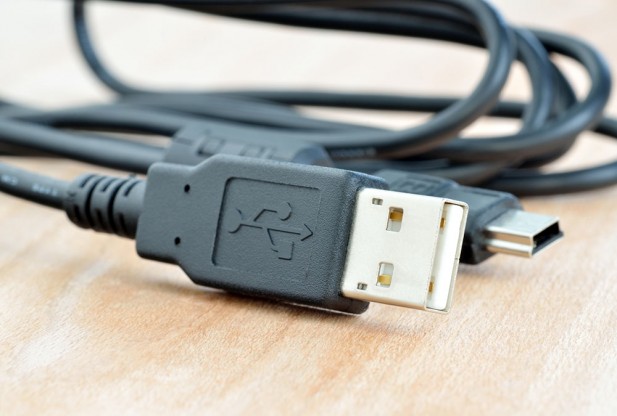
USB Gets A Speed Boost With 3.1 Release

USB Gets A Speed Boost With 3.1 Release:


The USB 3.0 Promoter Group has completed its USB 3.1 Specification, which will enable the SuperSpeed USB, offering speeds up to 10 Gbps.

To get the 10 Gbps rate of the SuperSpeed USB, the standard uses more efficient data encoding. The USB 3.0 Promoter Group says it will deliver more than twice the effective data throughput performance. This is possible by using enhanced USB connectors and cables.

“The USB 3.1 specification primarily extends existing 3.0 protocol and hub operation for speed scaling along with defining the next higher physical layer speed as 10 Gbps,” said Brad Saunders, USB 3.0 Promoter Group chairman, in a statement from the organization. “The specification team worked hard to make sure that the changes made to support higher speeds were limited and remained consistent with existing USB 3.0 architecture to ease product development.”

Developers will be able to upgrade existing USB protocols, and use the faster speeds on new devices and applications.

“We recognize this advancement in USB technology is an important development for our customers,” said Tom Bonola, chief technology officer, Business PC Solutions at HP. “The USB 3.1 Specification enables us to meet the growing needs of our customers for faster data transfer while maintaining backwards compatibility with existing devices.”

While the USB 3.0 Promoter Group plans to continue advancements on the standard, the new update comes from industry demand as much as from the initiatives of the group.

“The industry has affirmed the strong demand for higher throughput, for user-connected peripherals and docks, by coming together to produce a quality SuperSpeed USB 10 Gbps specification,” said Alex Peleg, Vice President, Intel Architecture Group. “Intel is fully committed to deliver on this request.”

The .1 release, USB 3.1, is backwards compatible with USB 3.0 and 2.0, The Register reports. “The new speed will only be achievable with a kit using USB 3.1, but such products will work just fine in older USB ports,” the article explained.

“While maintaining backward compatibility, USB continues to advance to meet customer’s growing need for higher speed data,” said Roland Sperlich, TI Consumer and Computing Interface Product Line Manager. “The 10 Gbps data rate allows designers across many industries to do more with a universal standard.”

“In this multi-device world, the USB 3.1 updates will enable end-users to move content across devices quickly, conveniently and without worrying about compatibility,” said Emile Ianni, corporate vice president of Platform Solutions Engineering at AMD. “AMD thanks our engineers as well as the other technology contributors for bringing to market robust innovation that is designed to work seamlessly with new and existing solutions.”

USB 3.1 competes with the Thunderbolt I/O standard, which promises data transmission throughput speeds up to 20 Gbps. Performance on the competing platform has not proven to be as promised. The 20 Gbps speeds have been demonstrated in the lab, but are yet to be fulfilled in commercial applications.

Please Comment If You Like This Post.